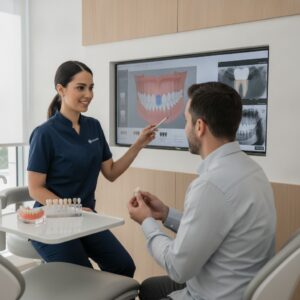

You’ve been eating on one side for years, and you know exactly which foods to avoid. If you’re ready for something better, dental implants in Cambridge may be the answer. At Woodlawn Dental Center, we help people replace missing teeth with implants that look and feel like the real thing.
Implants have changed how dentists replace teeth. Here’s what to know about dental implants in Cambridge, from how they work to what recovery is like.
How Dental Implants Work
Dental implants replace the whole tooth, from root to crown. A titanium post goes into the jawbone to act as the root, and a custom crown sits on top. They’re known for being durable and natural-looking.
Because the implant is anchored in bone, it doesn’t slip like a denture. You can bite into an apple, laugh at dinner, and forget it isn’t your original tooth.
Types of Dental Implants
You’ll hear about two main types. Endosteal implants, by far the most common, are anchored inside the jawbone itself. Subperiosteal implants rest on the bone beneath the gum and are an option some dentists use when the bone is too short for a standard post. Other options, like mini implants and zirconia implants, may also fit certain cases.
Benefits of Dental Implants
Implants have big advantages over bridges and dentures. One of the most important is protecting the jawbone. When a tooth is lost, the bone underneath shrinks over time. Implants act like new roots and help keep that bone, and the shape of your face, intact.
Dentures rest on the gums and can slip when you cough or bite into the wrong thing. Implants stay put, so you can eat what you want and smile without worrying.
The Dental Implant Process
Getting implants takes a few steps: a consultation, implant placement, healing (called osseointegration), and finally the crown. It starts with an exam of your oral health to make sure implants are a good fit.
What to Expect
On surgery day, the post goes into the bone while you’re numb and comfortable. Then the bone needs several months to fuse with it before the crown is attached. You may wear a temporary tooth during that time, depending on your case.
Sedation is available if you’re nervous, including nitrous oxide, oral sedation, and IV sedation given by a dental anesthesiologist.
Technology That Supports Implant Care
At Woodlawn Dental Center in Cambridge, we plan implants with 3D CBCT imaging and guided surgery (CHROME GuidedSmile), so each implant is placed precisely. We also use CEREC to make same-day crowns and bridges in our office, which can mean fewer visits for some restorations.
Implant Cost and Financing Options
Implants are an investment in your health and comfort. The cost depends on the material of the crown, whether you need extra procedures like a bone graft, and how complex your case is.
If the price makes you nervous, that’s understandable. Woodlawn Dental Center offers financing options to help make implants fit your budget, and we’ll walk you through everything at your consultation.
Choosing the Right Dental Implants in Cambridge
If you’re comparing offices for dental implants in Cambridge, ask about experience, look at the technology they use and read what local patients say. Woodlawn Dental Center has served this area since 1991, and you can read reviews from local patients online before you decide.
Ask how many implants the office places, how they plan the surgery, and what follow-up care looks like. Clear answers are a good sign.
Common Concerns and Myths About Implants
A lot of fear about implants comes from myths. Many people expect the surgery to be far worse than it is. With anesthesia and sedation, most feel pressure rather than pain, and soreness afterward is usually manageable.
Another myth is that you’re too old for implants. Age matters less than your overall health and bone, which is why a good exam comes first.
Caring for Your Implants After the Procedure
Daily care keeps implants healthy for years. Brush, floss around the implant, and keep your regular checkups. Avoid smoking, which can slow healing and affect the gums around the implant.
FAQs About Dental Implants in Cambridge
How long do dental implants last?
Many implants last for decades when you brush, floss, and keep your checkups. The crown may need replacing after many years of wear.
Are dental implants painful?
Usually less than people fear. The area is numbed, sedation is available, and soreness afterward tends to fade within a few days.
What if I’m not a candidate for implants?
Bone grafting may make implants possible, or other options like dentures may be considered.
How do implants compare to dentures?
Implants are more stable, help preserve the jawbone, and feel more like natural teeth than traditional dentures.
When can I get back to normal activities after implants?
Many people are back at work within a few days. The bone keeps healing around the implant for several months after that.
Life After Missing Teeth
You’ve waited long enough to eat your favorite foods and smile without thinking about it. Schedule your consultation with Woodlawn Dental Center today and find out how dental implants in Cambridge can help you get your smile back.