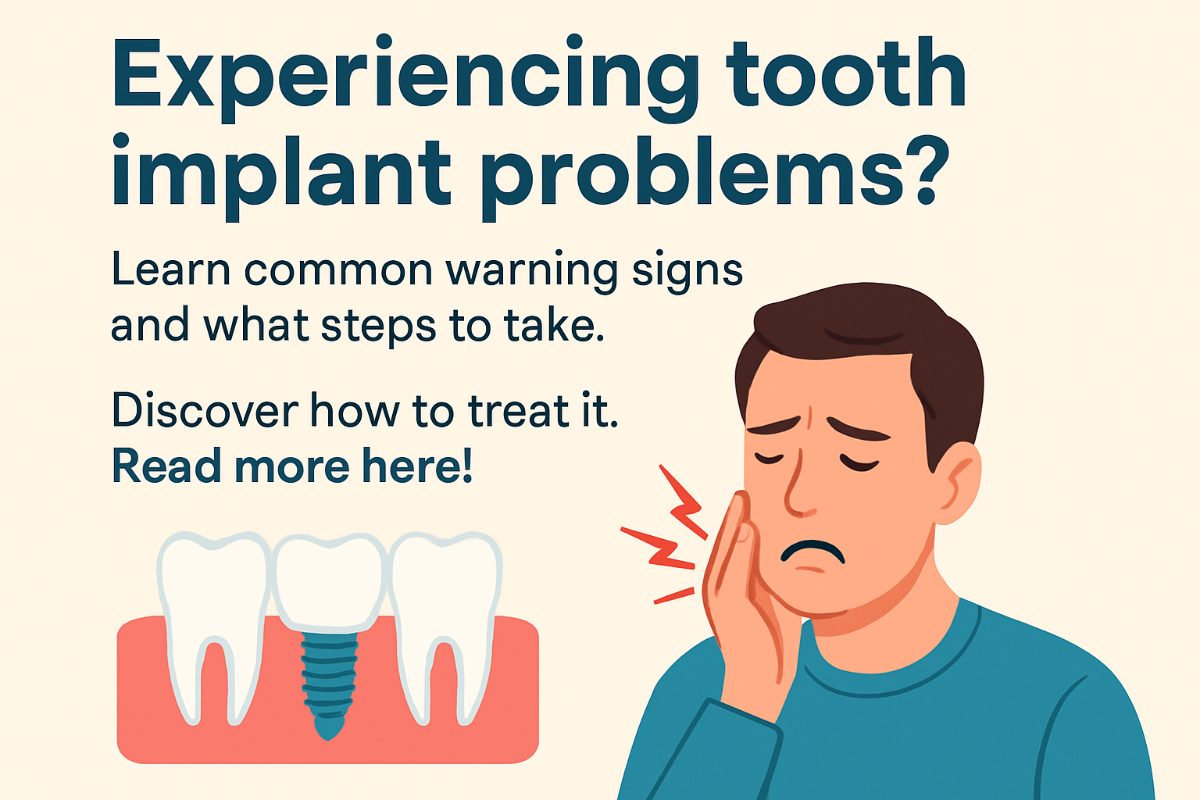
Tooth implant problems near Cambridge, OH can range from mild irritation to serious infections. If you’ve had an implant placed or restored, knowing the common signs and acting quickly matters—especially for patients worried about tooth implant problems near Cambridge, OH. This post explains warning signs, immediate steps you can take, how dentists diagnose issues, available treatments, ways to lower future risk, and what Woodlawn Dental Center offers for timely care.
Common tooth implant problems and warning signs
Infection (peri-implantitis)
Redness, swelling, bleeding at the gum line, pus, or a persistent bad taste or odor are common signs of infection. If you see these around an implant, it could be peri-implantitis, which can cause bone loss if left untreated.
Mechanical problems: loose or broken parts
A loose abutment, a fractured crown, or a restoration that moves when you bite are mechanical issues. You may notice rocking, clicking, or a change in your bite. These problems can damage the implant or the surrounding teeth if left untreated.
Pain, numbness, or persistent discomfort
Some soreness after surgery is normal, but ongoing sharp pain, tingling, or numbness weeks later may mean nerve irritation or improper implant placement. Any new, persistent discomfort should be checked promptly.
Bone loss and implant mobility
Gradual bone loss can show as gum recession or longer-looking teeth; sudden mobility of an implant is a serious red flag. A mobile implant usually needs urgent evaluation to prevent further damage.
Immediate steps to take if you notice tooth implant problems
Control pain with over-the-counter meds and avoid chewing on the affected side. Rinse gently with warm salt water to reduce bacteria. Do not use home glues, remove screws, or DIY fixes. Document symptoms with photos and notes on timing. Call your dentist right away for signs of swelling, fever, pus, or a loose implant; schedule a regular appointment for milder, stable symptoms.
How dentists diagnose tooth implant problems
Clinical exam and history
Your dentist will review your symptom timeline and medical history, then examine soft tissues, check implant stability, evaluate your bite, and look for signs of infection or trauma.
Imaging and digital assessment
X-rays or 3D scans show bone levels and implant position. Guided-surgery planning tools and digital workflows help identify malposition, fractures, or bone defects that aren’t visible on a basic exam.
Treatment options for common tooth implant problems
Non-surgical care includes improved home hygiene, professional cleaning around the implant, antibiotics for infection, and occlusal adjustments to correct biting forces. Surgical options may include flap surgery to clean infected tissue, bone grafting to restore lost support, or guided revision. In some cases, the crown or abutment can be repaired; if the implant has failed, removal and replacement may be needed.
How to reduce the risk of future tooth implant problems
Daily care matters: clean with floss or interdental brushes, use antimicrobial rinses, and follow any special instructions from your dentist. Lifestyle changes—quit smoking, keep diabetes under control, and treat bruxism with a nightguard—reduce risks. Keep regular maintenance visits for professional cleanings and early problem detection.
About Woodlawn Dental Center’s approach to implant complications
Woodlawn Dental Center in Cambridge, OH, uses a team-based model and digital tools to manage implant issues. The doctors offer guided implant surgery, in-office CEREC same-day crowns, and durable zirconia restorations, such as Prettau bridges. They offer financing options and accept many insurance plans to help patients get prompt care.
When to seek urgent care and next steps
Contact your dentist immediately if you have swelling, fever, uncontrolled pain, pus, or a loose implant. For other concerns, arrange an evaluation to prevent worsening. Early diagnosis and treatment often save the implant and protect your long-term oral health.