
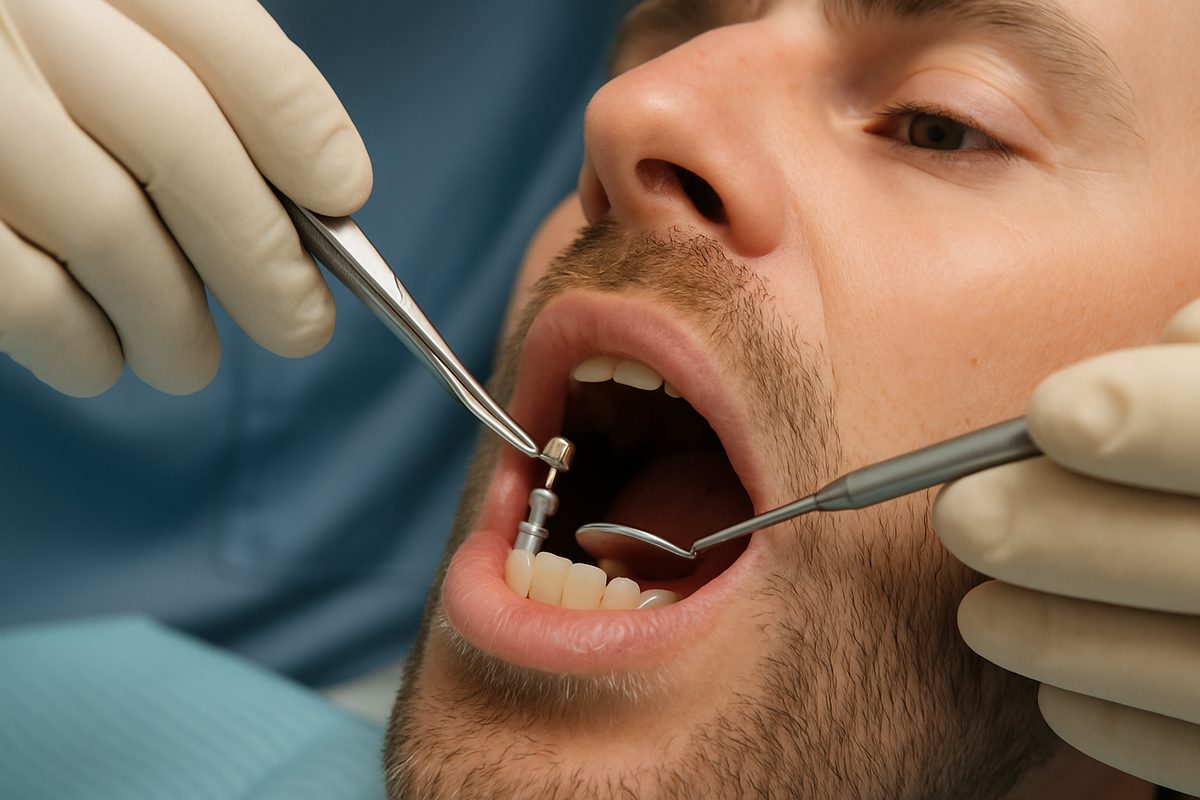
A dental abutment is the small connector that joins a dental implant (the metal post in your jaw) to the visible crown, bridge, or denture. This short guide explains how a dental abutment works, the main types and materials, how it’s placed, how to care for it, cost and timing expectations, and how to choose a provider. If you’re learning about a dental abutment in Cambridge, OH, this guide will help you know what to expect and what questions to ask.
What Is a Dental Abutment?
A dental abutment is the piece that sits on top of the implant fixture and holds the final tooth restoration. Think of the implant as the root, the abutment as the adapter, and the crown as the tooth. The abutment creates a stable connection so the crown, bridge, or denture stays secure and functions like a natural tooth.
Common Types of Dental Abutments
Stock vs. Custom Abutments
Stock abutments come premade in common sizes and are cheaper and faster. Custom abutments are made for your mouth using digital scans and lab work. Custom abutments fit the gum and crown better, often improving esthetics and long-term gum health, but they cost more and take longer.
Material Choices: Titanium vs. Zirconia
Titanium is very strong and biocompatible, making it the standard for most back teeth. Zirconia is tooth-colored and can give a more natural look for front teeth. Zirconia is chosen when esthetics matter or when metal sensitivity is a concern. Both materials work well when chosen to match the case.
Angled, Straight, and Temporary Abutments
Straight abutments sit directly on top of the implant. Angled abutments correct implant angle when placement isn’t perfectly vertical. Temporary abutments hold a provisional crown while the implant heals and the final restoration is made.
How a Dental Abutment Is Placed
Step-by-step: from implant healing to abutment connection
After the implant heals and integrates with bone (often a few months), the dentist will take a scan or impression. A try-in checks fit and gum contour. The final abutment is attached and the crown is placed by screw or cement. Workflows may use digital design and in-office milling for faster results.
Screw-Retained vs. Cement-Retained Restorations
Screw-retained crowns attach with a visible screw access hole that can be removed for repairs — easier to retrieve. Cement-retained crowns are cemented over the abutment for a cleaner look but can be harder to remove and may risk excess cement under the gum if not handled carefully.
How the Abutment Affects the Final Restoration
The abutment determines how the crown sits, the gum shape around the tooth, and how well you bite. A precise abutment improves fit, comfort, and esthetics. For single crowns, bridges, or full-arch zirconia fixed bridges, choosing the right abutment keeps the restoration stable and helps gum tissue stay healthy.
Care, Maintenance, and Signs of Problems with a Dental Abutment
Daily care
Brush twice daily, floss or use interdental brushes around the implant, and use antimicrobial rinses if recommended. Regular cleanings with your dentist or hygienist help prevent plaque and gum problems around the abutment and crown.
When to call your dentist
Contact your dentist if you notice looseness, persistent pain, swelling, pus, ongoing bleeding, or a change in your bite. Early action can prevent bigger issues with the implant or abutment.
Cost and Timeline Expectations for a Dental Abutment
Cost and time vary by whether the abutment is stock or custom, the material (titanium vs. zirconia), and any extra procedures like bone grafting. Digital workflows and same-day options can shorten timelines but may affect cost. Ask for an itemized estimate during planning.
Choosing a Provider for Dental Abutments
Look for providers with implant experience, digital or guided implant surgery, and in-office restoration capabilities. Ask about experience placing and restoring implants, use of guided surgery, and whether they offer same-day crown options. If you’re searching for a dental abutment in Cambridge, OH, choose a team that shows clear treatment plans and follow-up care.
Woodlawn Dental Center in Cambridge, OH offers guided implant surgery, CEREC same-day restorations, and zirconia options for esthetic needs. Their team of experienced doctors provides in-clinic planning and digital workflows for predictable results while focusing on patient comfort and long-term care.
If you think a dental abutment in Cambridge, OH might be right for you, schedule a consult to review your implant and restoration options. Bring any dental records or x-rays, a list of medications, and questions about materials, timelines, and costs. Ask about options for same-day restorations, guided surgery, and long-term maintenance.