
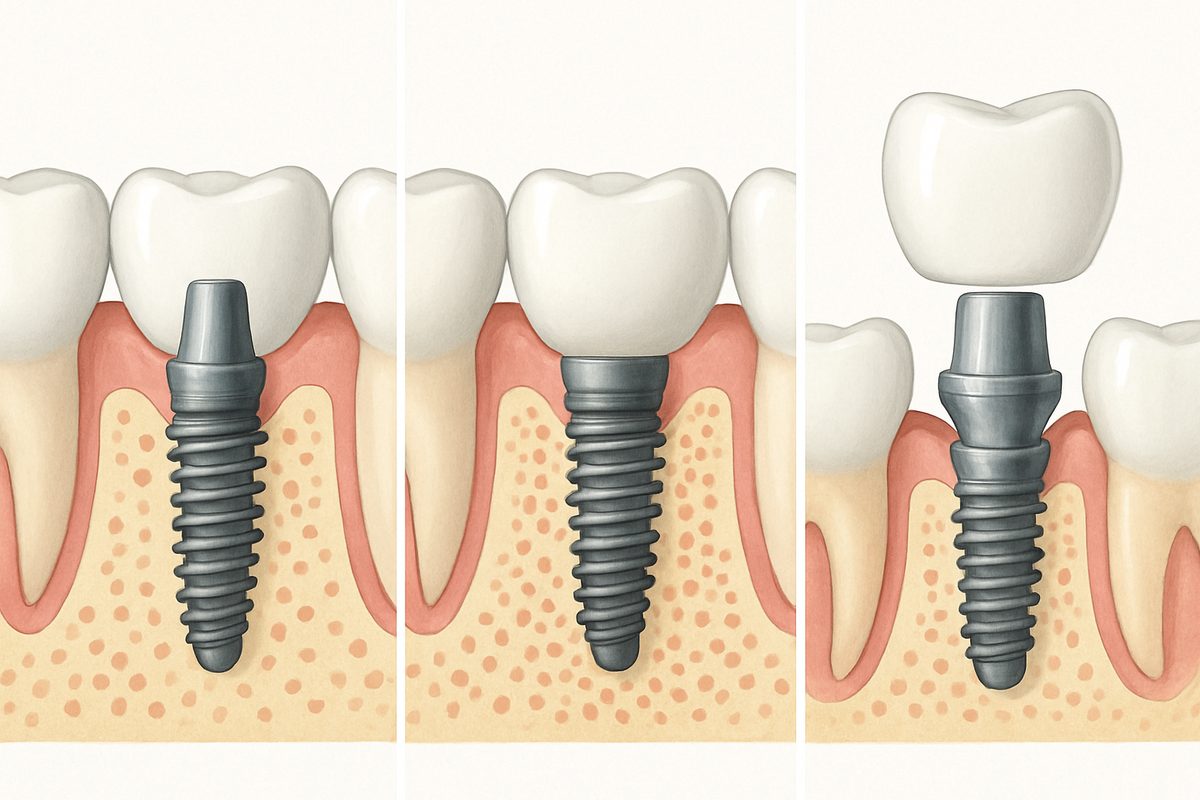
If you’ve asked “how do teeth implants work in Cambridge, OH,” you’re asking about a reliable way to replace missing teeth with something that looks, feels, and functions like natural teeth. Dental implants are artificial roots—usually made of titanium or zirconia—placed in the jaw to support a crown, bridge, or denture. Below is a clear, step-by-step look at the process so you know what to expect and how long treatment can take.
What Are Dental Implants?
Dental implants are small posts that act as artificial tooth roots. Most are made from titanium or zirconia because those materials are strong and bond well with bone. Implants are used instead of traditional bridges or dentures when patients want a stable, long-lasting solution that preserves bone and keeps adjacent teeth intact.
How Do Teeth Implants Work: Step-by-Step
Initial exam and planning
Your dentist will check your gums, teeth, and bone. X-rays or a CBCT scan map the jaw and nearby nerves. This creates a treatment plan that shows where implants should go and whether bone grafting or sinus lifts are needed.
Placing the implant
Under local anesthesia, the clinician places the titanium or zirconia post into the jawbone. The procedure is usually outpatient and takes an hour or two per implant. Sutures may be used, and some patients can receive temporary restorations the same day.
Osseointegration (healing)
Osseointegration is when bone grows tightly around the implant, locking it in place. This can take 3–6 months, depending on location and bone quality. That fused connection is why implants are so stable compared with dentures or bridges.
Abutment and restoration
After healing, an abutment is attached to the implant, and a final crown, bridge, or denture is made to fit. Some practices offer same-day crowns for simple cases. The final restoration restores chewing, speech, and appearance.
Who Is a Good Candidate?
Good candidates have healthy gums and enough jawbone to support the implant. Chronic conditions like uncontrolled diabetes, heavy smoking, or certain medications can affect healing. Where bone is thin, grafting or sinus lifts can build volume, making implants possible.
Types of Implant Restorations
Options include a single implant with a crown, an implant-supported bridge for several missing teeth, implant-retained dentures that snap on, and full-arch fixed zirconia bridges for complete restorations. Choice depends on the number of missing teeth, budget, and long-term goals.
What to Expect During Recovery and Long-Term Care
Expect some swelling and a soft-food diet for a few days after placement. Follow-up visits monitor healing and the fit of the restoration. Daily brushing, flossing, and regular dental checkups help implants last for decades.
Risks, Complications, and How to Reduce Them
Possible issues include infection, implant failure, or nerve irritation. Careful planning, good oral hygiene, quitting smoking, and seeing experienced clinicians lowers risk.
Why Experience and Technology Matter
Experienced teams and tools like guided implant surgery, in-office milling, and zirconia bridges improve accuracy and outcomes. Woodlawn Dental Center in Cambridge, OH, combines advanced tech with experienced doctors to plan and place implants precisely.
Next Steps: Getting a Consultation
To learn if implants are right for you, schedule an exam. A consult clarifies the timeline, cost, and financing or insurance options available at the practice. Ask about guided surgery and same-day restoration choices during your visit.