If you’ve wondered how long dental implants have been around, the short answer is: people tried tooth replacements for thousands of years, but modern dental implants as we know them began in the mid-20th century with a scientific discovery called osseointegration. This post walks through ancient experiments, the 1950s–60s breakthrough, how materials and digital tools improved implants, and what that history means for patients today.
A quick answer: how long have dental implants in Cambridge, OH
People attempted tooth replacement for millennia (think shells, ivory, and metal), but reliable modern implants started after the 1950s when researchers discovered that certain metals could fuse with bone, launching today’s high-success treatments.
Ancient attempts at tooth replacement
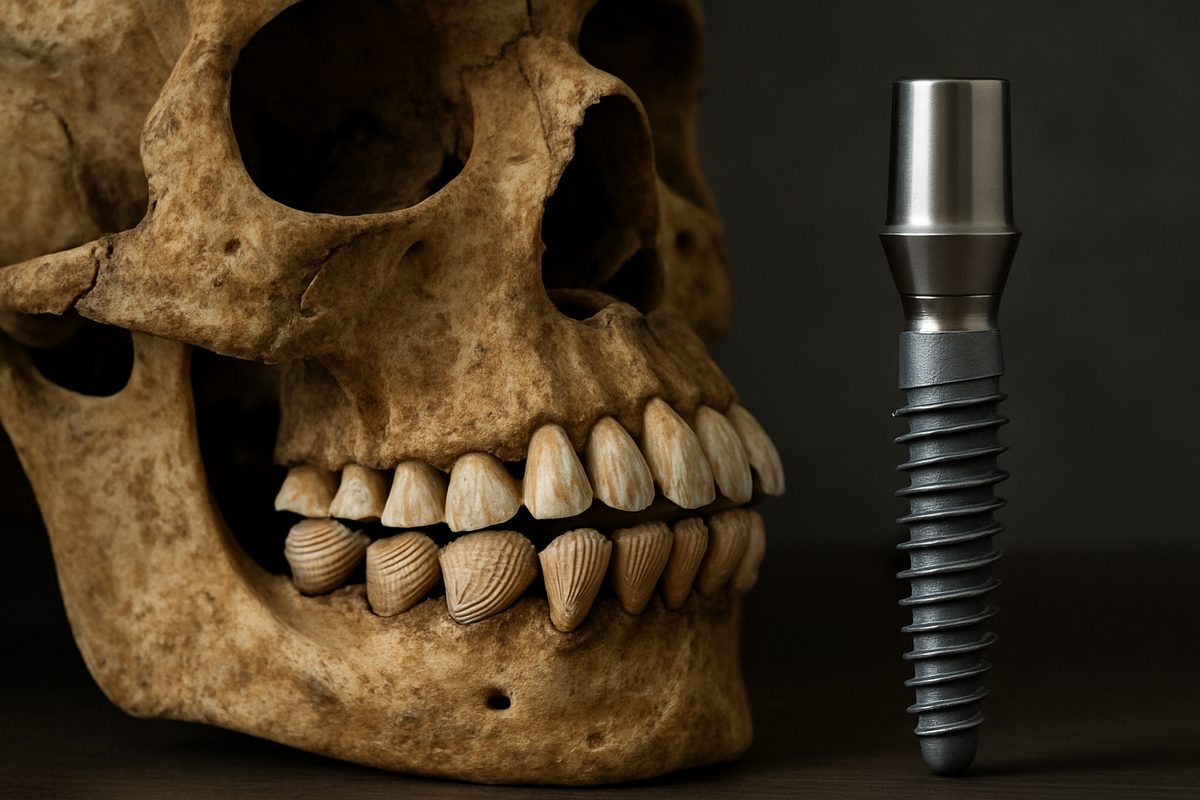
Archaeologists have found early attempts to replace teeth using shells, bamboo, gold, and ivory. Those early “implants” often failed because of infection, poor fit, and no real connection to bone. They show humans have long sought permanent tooth solutions, but the science to make them last didn’t exist.
The modern beginning: mid-20th-century breakthrough
Osseointegration and Dr. Per-Ingvar Brånemark
Osseointegration is the process by which living bone bonds directly to a metal surface. Swedish researcher Dr. Per-Ingvar Brånemark noticed this in the 1950s and realized it could securely hold teeth in place. That discovery turned implants from experimental to predictable.
Early clinical milestones
The first predictable, long-term implant cases in the 1960s and 1970s showed that patients could get single teeth, bridges, and even full-arch restorations that lasted. Over the next decades, success rates rose, and implants became part of routine dental care.
How implant materials and designs evolved
Early attempts used many materials; titanium became the gold standard because it bonds well with bone and resists corrosion. More recently, zirconia implants and Prettau zirconia bridges offer metal-free, highly aesthetic options. Implant shapes, threaded designs, and surface textures also changed to improve stability and healing. Prosthetic connections grew more precise, improving fit and appearance.
Surgical and digital advances that changed placement
Guided implant surgery and digital workflows
Guided implant surgery, 3D imaging, computer-guided placement, and digital planning let clinicians place implants more safely and accurately. Same-day restorations and in-office milling like CEREC shorten treatment time and let patients leave with finished teeth faster than older multi-visit approaches.
What the history mean for patients today
Thanks to decades of research, modern dental implants have high success rates and can last many years with good care. Typical treatment timelines vary — from a few months for a single tooth to longer for grafting and full-arch cases. Good candidates have reasonable oral and overall health; those with bone loss may need bone grafting before implants.
Common myths about dental implants
Myth: “Implants are new and risky.” Not true — the core science is 60+ years old and refined. Myth: “Implants don’t last.” Modern implants often last decades when maintained. Both myths ignore the long history of improvements that made implants reliable.
How Woodlawn Dental Center approaches implants now
Woodlawn Dental Center uses guided implant surgery, digital planning, CEREC one-visit restorations, and Prettau zirconia bridges to give predictable, aesthetic results. The team-based approach at the Cambridge, OH, practice focuses on safety, precision, and long-term outcomes.
Should you consider dental implants? Next steps
If you’re missing teeth or tired of removable dentures, schedule a consultation. Bring any recent X-rays or medical history. Ask about financing and insurance options. A personalized evaluation will outline timelines, whether bone grafting is needed, and the best restorative plan. Conclusion: From ancient experiments to modern digital workflows, dental implants rest on decades of scientific and technological research — making them a reliable option for many patients today.