
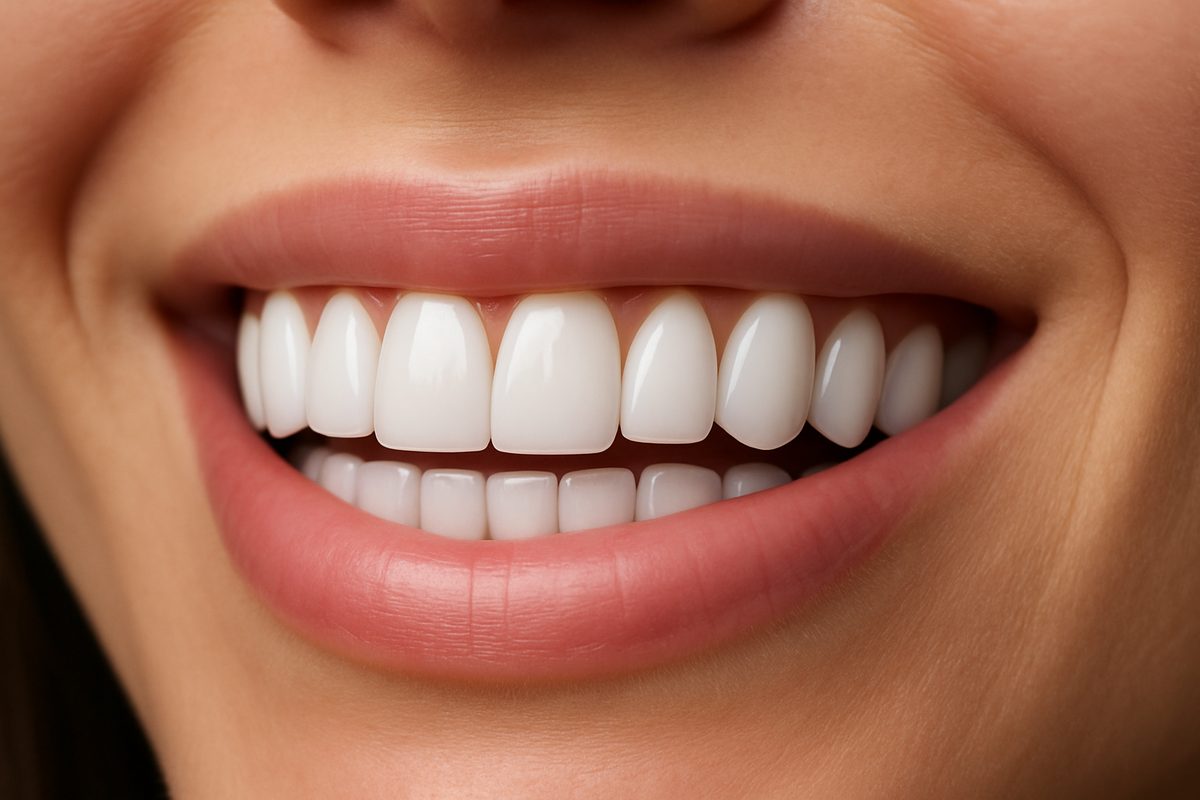
A veneer on teeth is a thin shell bonded to the front of a tooth to improve color, shape, or alignment. People who get veneers usually want a brighter, more even smile — they may have stains that don’t respond to whitening, small chips, gaps, or minor crowding. This post explains the main types of veneer on teeth, who is a good candidate, the step-by-step process, expected costs, aftercare, and practical next steps if you’re considering treatment.
Types of Veneer on Teeth
Porcelain veneers
Porcelain veneers are custom-made in a lab from ceramic. They mimic natural tooth enamel, resist stains, and often look the most lifelike. Typical lifespan is 10–20 years with good care. Porcelain is chosen when long-term aesthetics and durability matter most. Expect a precise fit and natural translucency compared with other options.
Composite (direct) veneers
Composite veneers are applied and shaped directly on the tooth by the dentist. They’re faster and less expensive than porcelain. Pros: lower cost, same-day placement, easier repairs. Cons: shorter lifespan (about 5–7 years), more prone to staining, and not as lifelike as porcelain. Composite is a good choice when you want an affordable, quick improvement or want to preserve more natural tooth structure.
No‑prep and minimal‑prep veneers
No‑prep and minimal‑prep veneers require little or no enamel removal. They preserve tooth structure and can be placed quickly, but tradeoffs include bulkier feel and possible limitations in correcting major shape or alignment issues. These options can work well for mild cosmetic changes but may not match the durability or seamless fit of conventionally prepared porcelain veneers.
Who Is a Good Candidate for a Veneer on Teeth?
Good candidates are adults with healthy gums and teeth who want to improve the appearance of front teeth. Veneers commonly address:
- Deep stains or discoloration
- Chips and small fractures
- Gaps or uneven spacing
- Minor misalignment or irregular shape
Before placing a veneer on teeth, a dentist will check for cavities, gum disease, teeth grinding, and bite issues. These problems should be treated first to ensure long-term success.
When veneers aren’t the best choice
Veneers aren’t ideal when there is severe decay, advanced gum disease, large fillings, or major bite problems. In those cases, alternatives like orthodontics (Invisalign), crowns, or periodontal treatment may be more appropriate.
What to Expect During the Veneer Process
Typical steps for a veneer on teeth include:
- Consultation and exam with photos and X-rays
- Digital scans or traditional impressions
- Tooth preparation (small enamel removal for most porcelain veneers)
- Temporary restorations if lab-made veneers are required
- Final bonding and adjustments
Healing time is minimal; patients usually return to normal eating the same day after bonding.
Same‑day and digital options
Digital workflows, CEREC milling, and in-office zirconia fabrication can shorten treatment time for some patients. Some practices offer same-day restorations for single veneers or immediate provisional work, but many porcelain veneers still require a short lab turnaround for the best esthetic results.
Costs for a Veneer on Teeth and What Affects Price
Costs vary by material, location, and complexity. Typical ranges:
- Porcelain veneers: $900–$2,500 per tooth
- Composite veneers: $250–$1,000 per tooth
- No‑prep veneers: $800–$1,500 per tooth (varies by material)
Main cost drivers include the material (porcelain vs composite), number of teeth treated, whether tooth preparation or gum work is needed, lab quality versus in-office fabrication, and geographic location. For example, a cosmetic smile makeover with 8–10 veneers will be significantly more than a single veneer.
Insurance, financing, and ways to afford treatment
Most insurance plans don’t cover purely cosmetic veneer on teeth, though partial coverage may apply when veneers restore function or follow trauma. Common financing options include monthly payment plans, third-party medical credit (CareCredit), and in-office financing. Ask your dentist for a detailed estimate and payment options before starting treatment.
Aftercare, Longevity, and What to Expect Long Term
To maximize lifespan of a veneer on teeth:
- Brush twice daily and floss daily
- Avoid biting hard objects (ice, pens) and minimize staining foods
- Wear a night guard if you grind teeth
- See your dentist for regular checkups and cleanings
Porcelain veneers can last 10–20 years; composite typically lasts 5–7 years. Small chips in composite can often be repaired; porcelain repairs may require replacement of the veneer.
Why Consider Woodlawn Dental Center for Veneer on Teeth
Woodlawn Dental Center in Cambridge, OH offers a team-based, technology-driven approach to cosmetic care. The doctors use digital workflows like CEREC and in-office zirconia options to improve precision and speed. Their experience with cosmetic and restorative treatments helps deliver predictable outcomes for a veneer on teeth in Cambridge, OH while coordinating any needed periodontal or orthodontic support.
How to start
Schedule a consultation to review goals, get digital scans, and receive a written treatment plan with costs and financing options. Bring a list of current medications, recent dental records if available, and photos of smiles you like. For patients seeking a veneer on teeth in Cambridge, OH, Woodlawn Dental Center can discuss same-day options, lab-made porcelain choices, and affordable payment plans to fit your needs.