
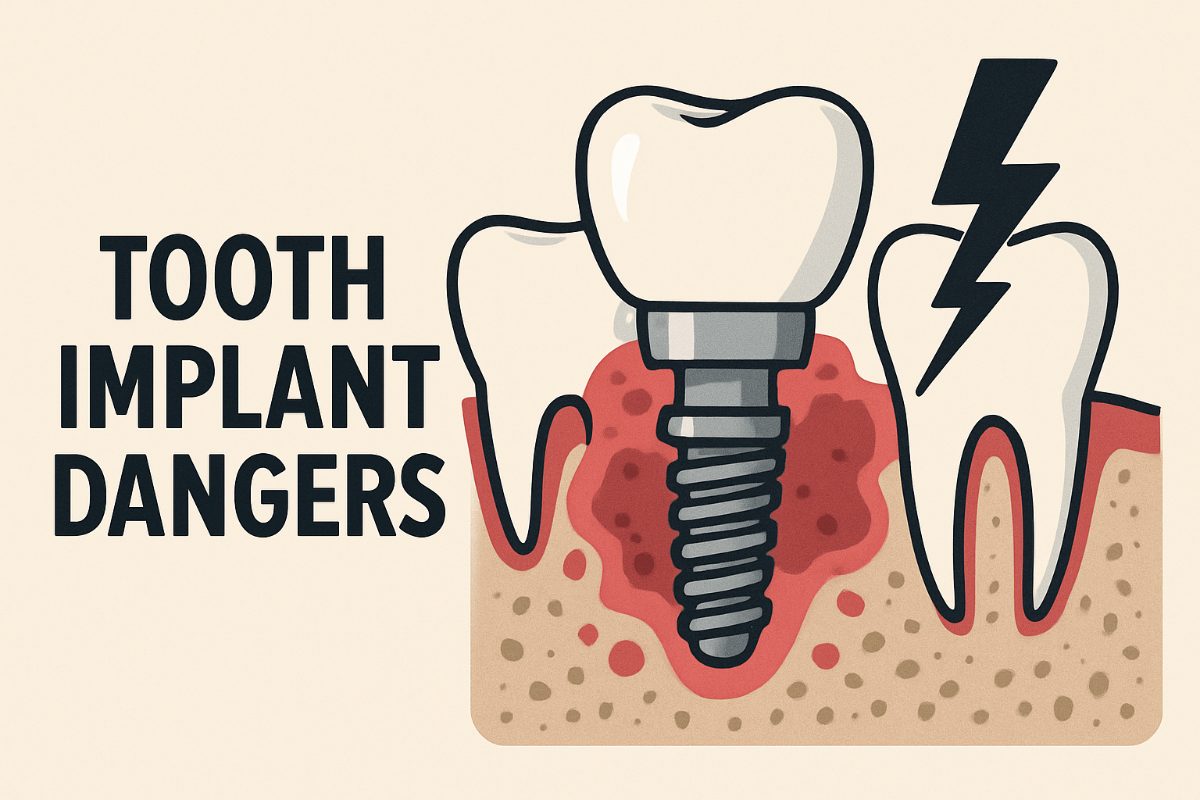
Are tooth implants safe? For most people, yes — dental implants are a reliable way to replace missing teeth and restore chewing, speech, and appearance. This post explains the common tooth implant dangers, how often problems happen, warning signs to watch for, and practical steps you can take to reduce risk before and after treatment.
What Are Dental Implants and Why People Choose Them
A dental (tooth) implant is a titanium post placed into the jaw to act as an artificial tooth root, with a crown, bridge, or denture attached to replace one or more missing teeth. People often choose implants because they provide stable chewing and better function compared with dentures, a natural appearance that improves confidence, and long-term durability when well cared for. However, implants do require surgery and a healing period, and like any procedure, they carry some risks both during placement and over the long term.
Common Tooth Implant Dangers and Who’s Most at Risk
Immediate surgical risks
- Infection at the surgical site — look for increasing redness, swelling, or discharge
- Excessive bleeding that doesn’t stop with pressure
- Nerve irritation or numbness, usually near lower jaw implants — this may feel like tingling or loss of sensation
Mid- to long-term complications
Later issues can include:
- Implant failure or loosening — the implant does not integrate with bone or becomes mobile
- Peri-implantitis — an infection of the gums and bone around the implant causing inflammation and bone loss
- Bone loss around the implant leading to implant instability
- Sinus problems from implants placed in the upper jaw if the sinus is breached
Risk factors that raise the chance of problems
Certain conditions or choices increase the likelihood of tooth implant dangers:
- Smoking or vaping
- Uncontrolled diabetes or other immune-compromising conditions
- Poor oral hygiene or untreated gum disease
- Low jawbone volume that makes secure placement harder
- Certain medications (for example, long-term bisphosphonates) or chemotherapy
- Inexperienced or poorly trained providers
How Often Tooth Implant Dangers Happen and Warning Signs
Fortunately, serious complications are uncommon, and most implants heal successfully, with many studies reporting success rates above 90%. Still, problems do occur, and early detection is critical. Warning signs that require prompt attention include persistent, severe pain that worsens instead of improving, increasing swelling or redness around the implant site, fever or general illness after surgery, an implant that feels loose or moves, numbness or tingling that does not improve within a few days, pus, a bad taste, or foul odor from the area, and, in rare but urgent cases, difficulty breathing or swallowing.
How to Minimize Tooth Implant Dangers & Choosing Safe Care
You can lower your risk by taking steps before, during, and after treatment and by choosing a qualified team.
Before surgery
- Provide a full medical history and list of medications
- Ask for imaging such as CBCT (3D scan) to assess bone and anatomy
- Treat active gum disease and improve oral hygiene first
- Discuss smoking cessation if you smoke
During and after care
- Ensure sterile technique is used and follow post-op instructions closely
- Take prescribed antibiotics or pain meds only as directed
- Attend scheduled follow-up visits so the provider can check healing and catch problems early
If you’re concerned about tooth implant dangers or are considering implants, the best step is to get a professional evaluation. A qualified dentist or oral surgeon can review your health, explain risks specific to your situation, and recommend safer options if needed. With early planning, careful provider selection, and diligent follow-up care, you can lower risks and improve the long-term success of your dental implants.