
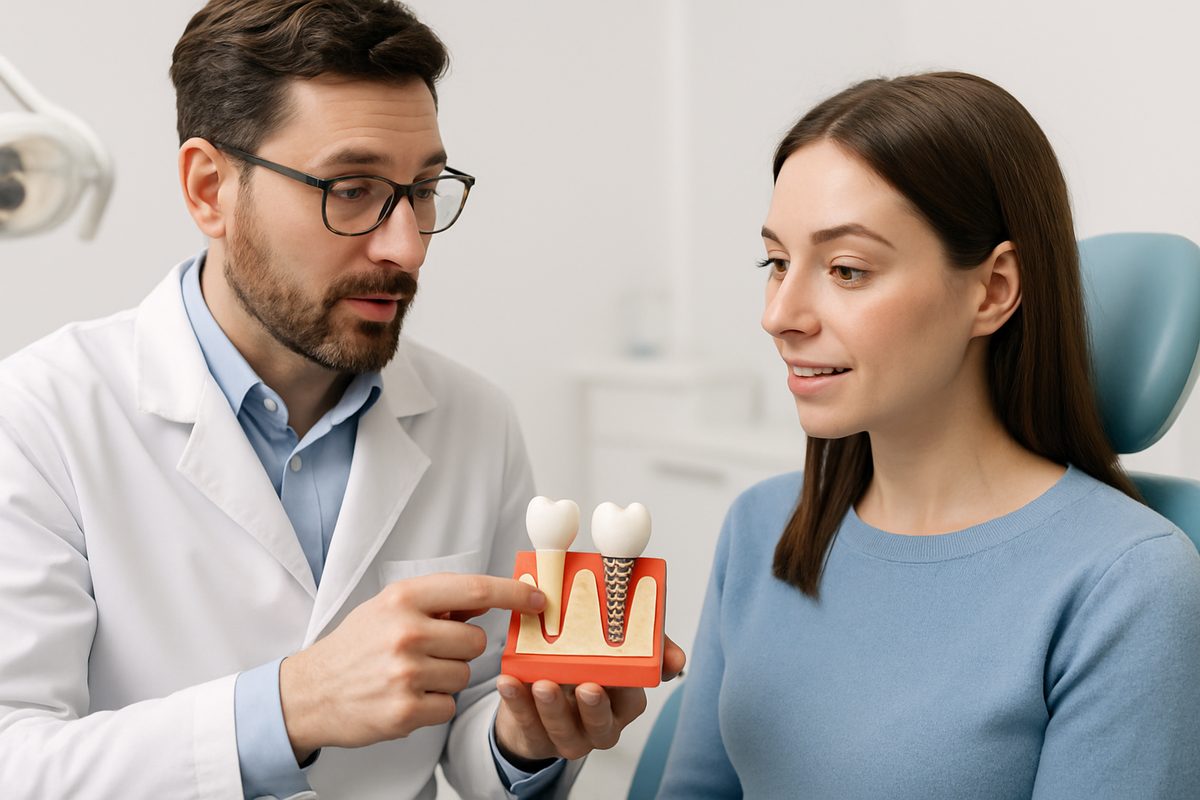
A dental implant is a small titanium or zirconia post placed into the jawbone to act as an artificial tooth root, topped with an abutment and a final restoration such as a crown, bridge, or full denture. Good candidates need adequate bone and gum health, and treatment generally involves a consultation with digital planning, surgical placement, three to six months of healing, and the final restoration. Woodlawn Dental Center in Cambridge, OH offers guided implant surgery and zirconia options for patients missing one or more teeth.
If you’ve been told you’re a candidate for implants but aren’t sure what that actually involves, you’re not alone. Here’s what a dental implant is made of, who tends to qualify, and what the process looks like from consultation to final restoration.
What Makes Up a Dental Implant Restoration
An implant restoration has three parts working together. The implant, or fixture, is the post itself, made of titanium or zirconia and placed directly into the jawbone. The abutment connects that post to your final restoration, whether that’s a single crown, a dental implant-supported bridge, or a full denture. On top sits the visible restoration, such as a same-day crown custom-shaded to match your smile.
Who Is a Good Candidate?
Bone density and gum health are the main factors we evaluate first. If periodontal disease is present, it typically needs to be treated before implant placement, and patients with insufficient bone may need bone grafting first. Beyond that, we also look at medical history and lifestyle factors like smoking, which can slow healing and affect long-term success.
What the Treatment Process Looks Like
Treatment starts with a consultation and a 3D scan to map your jaw and plan exact implant placement. From there, guided surgery allows the implant to be placed with precision based on that digital plan. After surgery, osseointegration, the process where the bone fuses to the implant, typically takes three to six months before your final restoration is attached.
Benefits and Common Risks
Implants function and feel closer to natural teeth than a removable denture, and because they replace the tooth root itself, they help preserve jawbone density that would otherwise shrink after tooth loss. As with any surgical procedure, there’s a small risk of infection or the implant not integrating as expected, though this is uncommon with proper care and follow-up.
Cost, Insurance, and Payment Options
Pricing depends on how many implants you need and whether grafting is part of your treatment plan. We provide an itemized treatment plan so you know the full cost breakdown before moving forward, along with financing options if you need them.
Why Advanced Technology Matters
Guided surgery and digital scanning make implant placement more precise and often more comfortable, reducing guesswork during surgery. For patients who need a full-arch solution, zirconia implants offer a strong, natural-looking, metal-free alternative to traditional bridge materials.
About Woodlawn Dental Center
Founded by Dr. Franklin Maximo in 1991, Woodlawn Dental Center has grown to include two other experienced doctors on the implant team, serving Cambridge, OH patients with guided surgery and in-house planning technology.
Frequently Asked Questions
What is a dental implant made of? Most implants use a titanium or zirconia post as the root, topped with an abutment and a final restoration like a crown, bridge, or denture.
Am I a good candidate for dental implants? Candidacy mainly depends on bone density and gum health. If you have gum disease or low bone volume, treating that first, sometimes with a bone graft, is usually part of the plan.
How long does the implant process take? Most patients complete treatment in about three to six months, covering healing and osseointegration, though the exact timeline depends on your case.
Does dental implant surgery hurt? Most patients describe recovery as manageable with standard aftercare, similar to a tooth extraction, and sedation options are available if you’d prefer to be more relaxed during the procedure.
What if I’m missing several teeth, not just one? Options like full mouth dental implants or a zirconia fixed bridge can replace an entire arch using a smaller number of strategically placed implants.
How much do dental implants cost? Cost depends on how many implants you need and whether bone grafting is required. We provide a detailed, itemized treatment plan at your consultation so there are no surprises.
Ready to Learn More?
Schedule a consultation at Woodlawn Dental Center in Cambridge, OH to find out if implants are the right fit for you.